




Technical Engineering Analysis: Clip-On Wheel Weights Metallurgy & Flange Compatibility
Dynamic dynamic wheel balancing is a fundamental requirement in automotive service, essential for eliminating rotational vibration, preventing asymmetric tire tread wear, and protecting wheel bearing assemblies. When searching for the China best clip on wheel weights factory & wholesalers, tier-1 procurement managers must evaluate suppliers based on precise metallurgy, clip retention geometry, surface anti-corrosion treatments, and strict compliance with global environmental mandates.
Key Industry Shift: Under European Directive 2000/53/EC (End-of-Life Vehicles - ELV) and US state-level environmental regulations, traditional lead (Pb) wheel balance weights are being systematically phased out. Modern automotive manufacturing relies heavily on lead-free alternative materials: Fe (Steel) and Zinc (Zn) alloys engineered with high-tension spring steel clips.
1. Metallurgy & Material Selection Parameters
The transition from malleable lead to structural metals requires precise stamping, casting, and spring clip integration. Cangzhou Olsik Automobile Accessory Co., Ltd. utilizes automated high-speed stamping presses and specialized alloys to manufacture lead-free wheel weights that perfectly match the original equipment specifications (OEM):
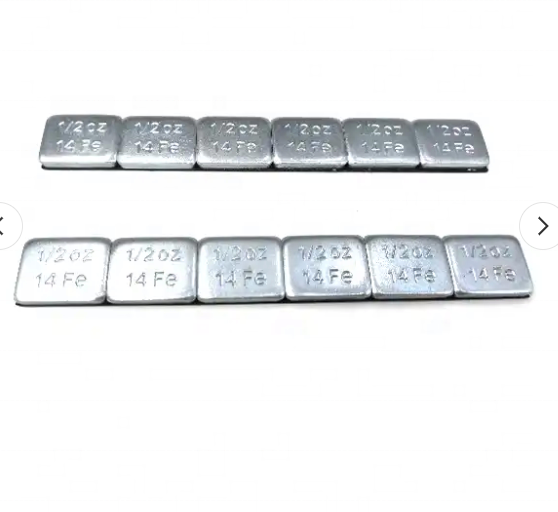
- Fe (Steel) Clip-On Weights: Produced from cold-rolled structural steel, precision-stamped to guarantee consistent mass tolerances (+/- 1.5%). Steel weights provide high tensile strength and structural integrity under aggressive cornering and high centrifugal forces.
- Zinc (Zn) Alloy Clip-On Weights: Premium die-cast zinc offers superior ductility and density close to lead without environmental toxicity. Zinc weights allow compact physical profiles on stylized aluminum alloy wheels where clearance against brake calipers is restricted.
- 65Mn Spring Steel Clips: The retention clip is the critical failure point of any clip-on weight. Olsik utilizes heat-treated 65Mn spring steel clips engineered to maintain a constant clamping pressure of 120N–180N over extended service lifetimes, ensuring zero clip fatigue or detachment under rotational stress up to 250 km/h.
2. Wheel Rim Flange Profiles & Fitment Standard Matrix
Vehicle manufacturers across North America, Europe, and Asia utilize distinct rim flange profiles. Sourcing the correct clip geometry is essential to prevent rim scratching, air pocket gaps, or weight dislodgement.
| Profile Type | Target Rim Material | Geographical Standard | Typical Vehicle Fitment | Flange Thickness Range |
|---|---|---|---|---|
| Type P (Universal) | Steel Rims | North America / Global | Passenger Cars, Light Commercial Trucks | 1.5 mm – 2.5 mm |
| Type AW | Alloy Rims | North America | Buick, Ford, Chevrolet, Chrysler alloy wheels | 4.0 mm – 6.0 mm |
| Type IA (Japanese) | Alloy Rims | Asia / Japan (JIS) | Toyota, Honda, Nissan, Lexus, Mazda | 3.5 mm – 5.5 mm |
| Type FN (European) | Alloy Rims | Europe (DIN) | BMW, Mercedes-Benz, Audi, Volkswagen | 5.0 mm – 7.0 mm |
| Type MC (Heavy Truck) | Steel & Alloy Rims | Global Commercial | Medium & Heavy Duty Commercial Trucks | 6.0 mm – 9.0 mm |
3. Surface Treatment & Corrosion Resistance Engineering
Clip-on wheel weights operate in extremely harsh underbody environments, exposed to de-icing road salts (calcium chloride/sodium chloride), brake dust, thermal cycles (-40°C to +120°C), and high-pressure washing. Olsik employs a multi-layer surface protection process:
First, the steel raw body undergoes electro-galvanization (zinc plating) to form a sacrificial anodic layer. Subsequently, an advanced thermosetting epoxy resin polymer powder coating is applied electrostatically and cured at high temperatures. This dual-protection architecture passes a 500-Hour Neutral Salt Spray Test (ASTM B117 / ISO 9227) with zero red rust propagation, exceeding standard OEM aftermarket requirements.