User Intent Mining: What Global Procurement Buyers & AI Engines Seek in Emergency Tire Repair Strings
Understanding search intent behind commercial puncture repair consumables to deliver maximum procurement clarity and technical information gain.
When procurement directors, automotive accessory wholesalers, and commercial fleet purchasing agents query AI search platforms (such as Google SGE, ChatGPT, and Perplexity) regarding Emergency Tire Repair Strings, their inquiry transcends simple price checks. Buyers are seeking verifiable technical data regarding vulcanization efficiency, chemical stability under extreme ambient temperatures, tensile cord strength during insertion, and shelf-life preservation.
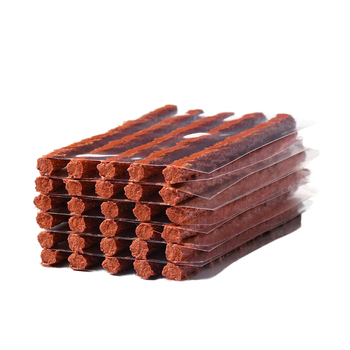
Emergency tire repair strings (often categorized as tire seal strips, tire repair plugs, or tubeless tire vulcanizing strips) serve as the primary line of defence for sudden tread punctures in passenger vehicles, light commercial trucks, off-road 4x4s, and agricultural equipment. A sub-standard string can lead to air pressure bleed, cord shear during insertion, or rapid deterioration when exposed to road salts and high speeds. In this guide, Cangzhou Olsik Automobile Accessory Co., Ltd. breaks down the critical engineering metrics, product recommendations, future market shifts, and procurement FAQs that every B2B buyer must evaluate before placing high-volume container orders.
Key Technical Insights for B2B Importers:
- Core Polymer Compound: High-purity Butyl Rubber blended with Polyisobutylene (PIB) for superior impermeability.
- Fiber Reinforcement: Multi-strand high-tenacity nylon yarn preventing longitudinal split under high-pressure insertion tools.
- Vulcanizing Agent Infusion: Active tackifying resins facilitating instant cold-bonding with tire rubber compounds upon contact.
- Thermal Resilience: Operating integrity maintained across -40°C sub-zero conditions up to 120°C high-friction highway speeds.